How this guide works: This is a product-type buying guide, not a hands-on test of specific products. The retailer button below is an untracked search link. Read our disclosure.
A small bathroom can make the wall above the toilet look like free square footage. It is not quite free: the tank must remain serviceable, the floor may slope, the room gets damp, and a tall unit needs to be stable. Those practical limits decide whether an over-toilet shelf is useful or simply another object to maneuver around.
Do the tank-lid test
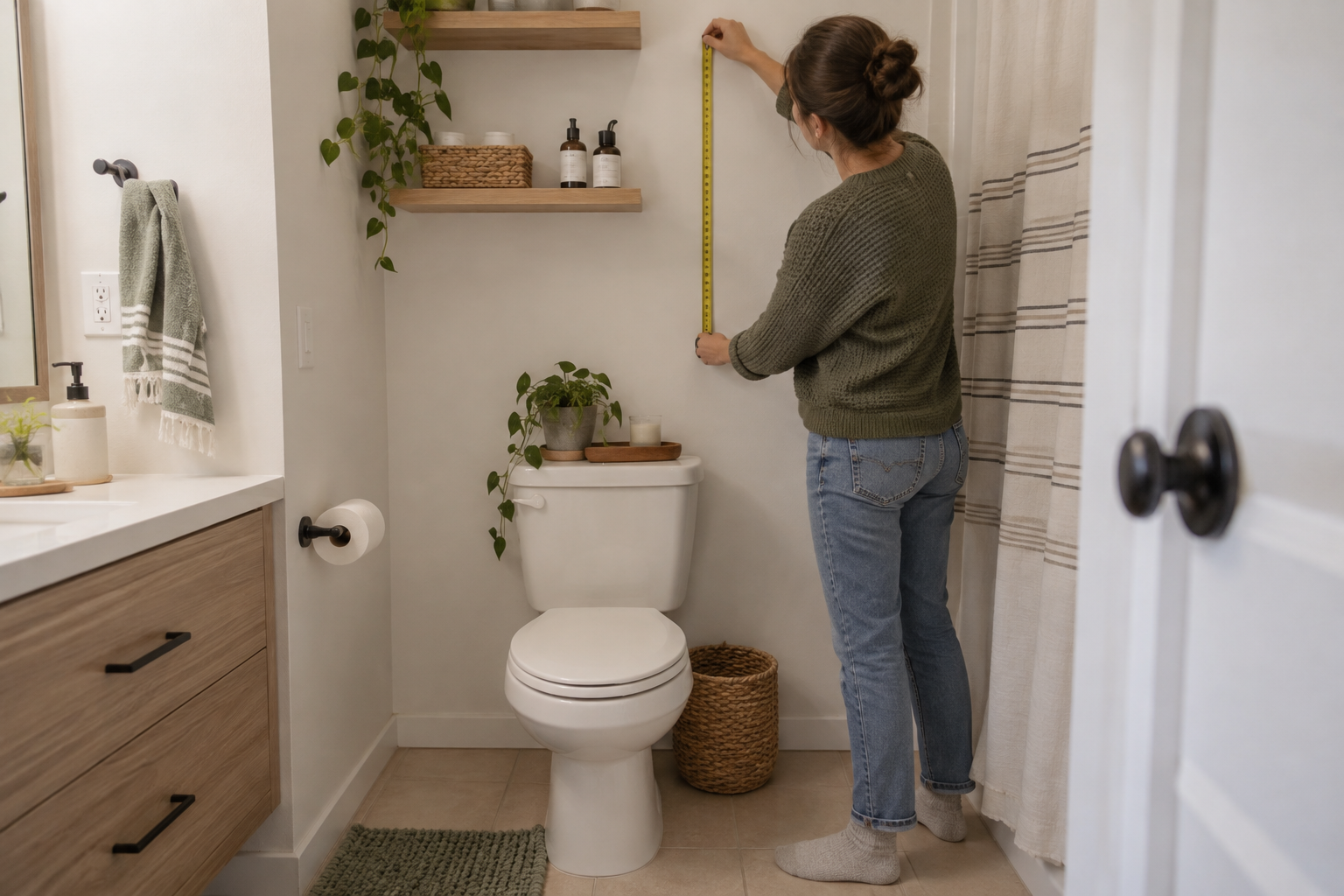
Lift the tank lid as if you needed to reach the mechanism. Note how high it must rise and whether you pull it forward or straight up. Measure the toilet at its widest point, then measure the space between the wall and the back of the tank. Include baseboards and any pipe covers. A freestanding unit that straddles the toilet may have plenty of outer width yet too little clear space between its legs.
Check the door, shower curtain, window, exhaust fan, and any towel bar. If a shelf blocks the fan or sits in direct shower spray, it may create more upkeep than storage. The U.S. EPA notes that bathrooms are often damp and that ventilation and drying wet surfaces help control moisture; see its indoor-air guidance.
Choose the least intrusive format
What belongs above a toilet?
Light, frequently used items are the easiest to manage: spare toilet paper, a small basket of toiletries, or folded hand towels. Avoid placing heavy glass containers where they could fall. If you are storing towels, notice whether they stay dry between showers; a closed cabinet is not automatically better if damp air is trapped inside.
For a tall unit, read the maker’s stabilizing instructions. “Freestanding” describes where the frame sits; it does not guarantee that wall restraint is unnecessary. The CPSC advises securing top-heavy furniture and following manufacturer instructions; see Anchor It. If your lease rules out the needed installation, do not improvise an unsafe workaround.
The sensible purchase order
- Confirm that the tank lid and flush controls remain accessible.
- Choose the form—floor-standing or wall-mounted—based on your lease and wall construction.
- Compare the clear opening and shelf depth in product diagrams, not only the outer dimensions.
- Check material care and return terms for a humid room.
When the wall is only barely large enough, leaving it empty may make the bathroom feel better and keep maintenance simpler. Storage is valuable only when it does not make the room harder to use.
Take your measurements with you.
Use the retailer search as a starting point, then verify the listed dimensions, mounting instructions, seller, and return policy yourself.
Browse current options at AmazonProduct availability and specifications can change. We do not currently receive a commission from this search link.