How this guide works: This is a product-type buying guide, not a hands-on test of specific products. The retailer button below is an untracked search link. Read our disclosure.
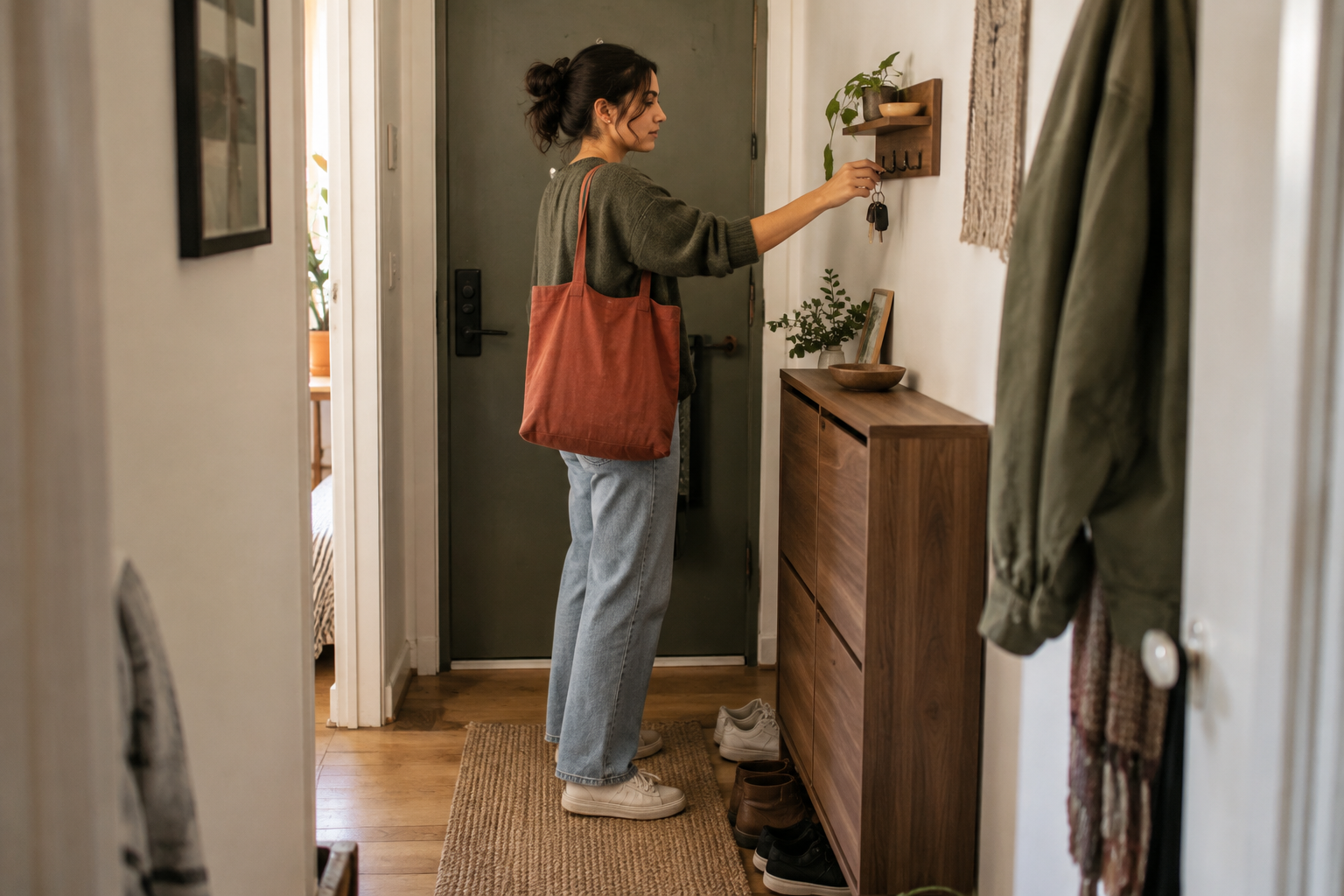
A narrow entry has several jobs at once: the door must swing, people need to pass, wet shoes need to dry, and keys need a predictable landing place. A storage unit that wins on pair count but turns the doorway into an obstacle has solved the wrong problem.
Mark the footprint on the floor
Before shopping, open the front door all the way. Use painter’s tape or a piece of cardboard to mark the depth of a cabinet or rack you are considering. Walk in carrying a grocery bag. If another person uses the entry, ask them to pass you. This simple mock-up catches problems a floor plan misses: a bag brushing a corner, a closet door striking the unit, or a delivery box with nowhere to sit.
Measure from the wall to the nearest point that must remain clear, including baseboards. Check the door arc, closet doors, and the longest shoe in the household. A listing’s “holds 12 pairs” claim may assume small low-top shoes; boots and wide sneakers can change the math quickly.
What actually belongs by the door?
Count the shoes worn in a normal week, then add a place for one wet pair. Seasonal pairs can live in a closet. If three people each leave four pairs at the door, buying a rack for all 12 may make the hallway feel permanently full. A smaller rack plus an indoor rotation can be the better purchase.
Wet shoes change the recommendation
A closed cabinet looks tidy at 8 a.m.; at 8 p.m., a pair of rain-soaked sneakers may need air. If that is a frequent scenario, an open rack over a washable tray is easier to live with. Reserve a closed unit for dry pairs and leave a separate landing spot for wet ones.
Safety and renter reality
Very slim, tall furniture can be easy to tip. Check the manufacturer’s assembly and anchoring instructions before buying, especially in a home with children. If the necessary installation conflicts with your lease, choose a lower, more stable solution rather than assuming a freestanding cabinet needs no restraint. The U.S. Consumer Product Safety Commission advises securing top-heavy furniture and following its instructions; see its Anchor It guidance.
Our recommendation
For most genuinely narrow halls, start with a low open rack that holds the week’s active shoes, not the whole collection. Choose a tilt-out cabinet only after checking both internal shoe fit and the space its fronts need to open. If your taped footprint makes the entrance feel pinched, do not force storage there—move the overflow to a closet.
Take your measurements with you.
Use the retailer search as a starting point, then verify the listed dimensions, mounting instructions, seller, and return policy yourself.
Browse current options at AmazonProduct availability and specifications can change. We do not currently receive a commission from this search link.