How this guide works: This is a product-type buying guide, not a hands-on test of specific products. The retailer button below is an untracked search link. Read our disclosure.
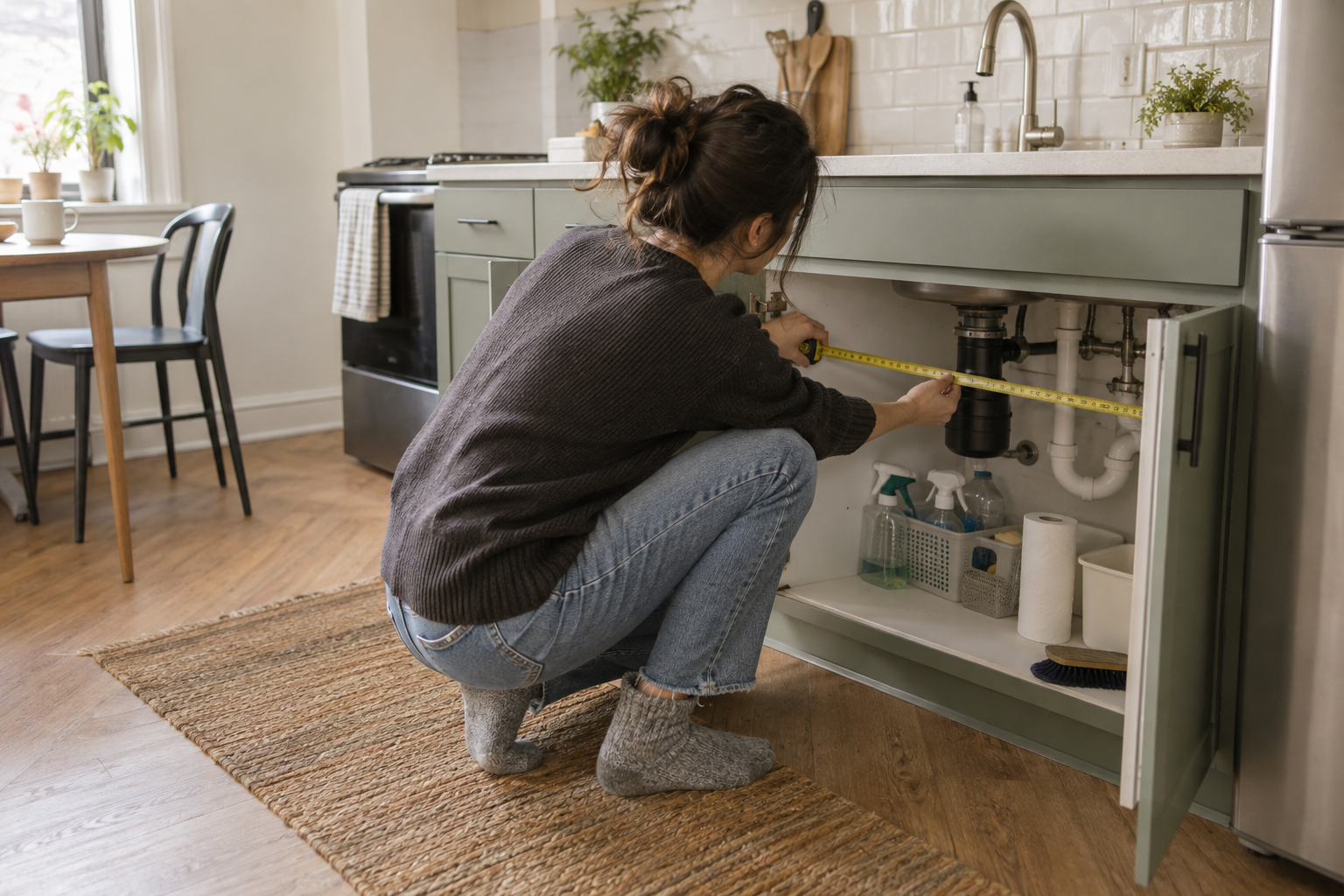
An under-sink cabinet can look generous in a listing photo and feel tiny when the door is open. The drain drops through the middle; a disposal may take one side; valves need to remain reachable. Those awkward shapes are the starting point, not a detail to work around after a rack arrives.
Empty it before you measure it
Put everything on the floor and make three piles: daily-use items, occasional refills, and things that belong elsewhere. Do not design a storage system around half-empty bottles you no longer use. Wipe the cabinet floor and look for moisture or staining before putting anything back. If you find an active leak, deal with that first; an organizer should never hide it.
Now measure the clear opening between the door hinges, not just the cabinet interior. Measure the usable depth with the door shut. Then note the lowest part of the P-trap or disposal and the positions of both shutoff valves. A quick sketch with these obstacles marked is more useful than one width × depth number. If the door has a center stile, measure each opening separately.
Set your tallest bottle back in the cabinet. Open and close the door. If the bottle hits a pipe or the door, any drawer holding it will need a different location—or the bottle needs to live elsewhere.
Pick a shape, not a promised capacity
Adjustable pipe-cutout shelves can be useful, but “adjustable” does not tell you how much weight they carry or whether the shelf becomes unstable at its widest setting. Read the manufacturer’s dimensions at the exact configuration you plan to use.
The listing details worth checking
- Overall dimensions versus tray dimensions: a frame may fit while the actual basket is too narrow for your cleaning bottles.
- Door-clearance height: include handles, feet, and any upper rail—not only the storage tray.
- Access to plumbing: you should be able to reach a shutoff valve without dismantling the organizer.
- Material and cleaning: a wipeable bin is easier to recover from a spilled soap bottle than an unfinished wood shelf.
- Return terms: odd plumbing makes fit uncertain even after careful measuring.
When to skip the organizer
If the usable spaces are narrow but shallow, a pair of inexpensive open bins may do more than a complicated two-tier rack. If you keep only a few supplies beneath the sink, leave the back open rather than filling it for the sake of a tidy photo. The aim is to see what you own and get to the pipes, not to occupy every cubic inch.
Keep paper towels and other water-sensitive supplies off the cabinet floor. After installation, close the door slowly, pull each tray fully out, and rehearse removing the organizer in one motion. That final test is what turns a “fits on paper” purchase into useful daily storage.
Take your measurements with you.
Use the retailer search as a starting point, then verify the listed dimensions, mounting instructions, seller, and return policy yourself.
Browse current options at AmazonProduct availability and specifications can change. We do not currently receive a commission from this search link.